Water damage service
Gainesville Rapid Water Damage: ceiling water damage in Gainesville, FL
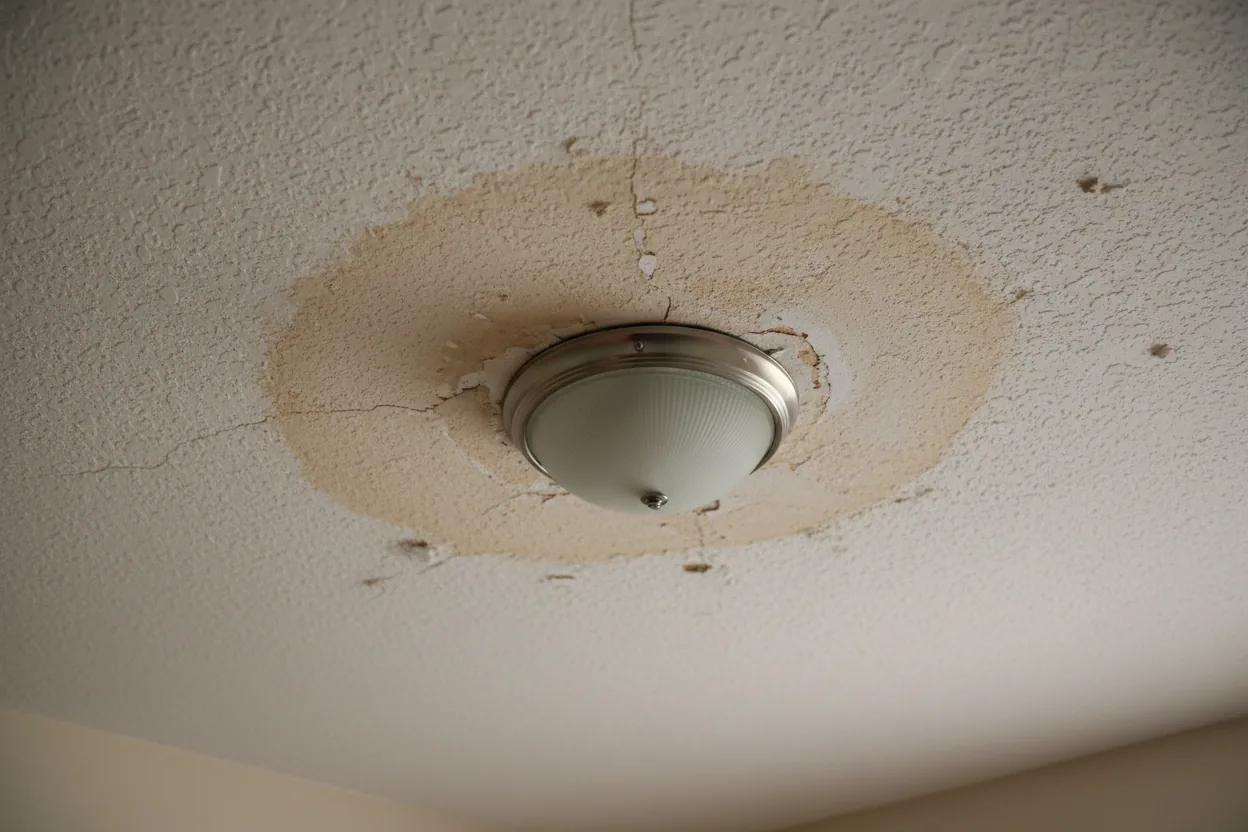
Gainesville Rapid Water Damage finds and dries the source behind ceiling water damage in Gainesville homes, which is almost never where the stain appears. A ceiling stain is the end of the water's journey, not the beginning: water enters, runs along the top of the drywall or down a truss, and drips at the lowest point it reaches, which can be a room away from the actual failure.
Call (352) 450-6122 Same-day response* across Gainesville and Alachua County
In this county the two causes are overwhelmingly the attic air handler and the roof. Most Gainesville homes built since the 1970s put the air handler in the attic, and a blocked condensate line overflows directly onto the ceiling below.
Diagnosing the source above the ceiling
Repairing a ceiling without finding the source produces a fresh stain within weeks, so diagnosis comes first and it happens in the attic.
Attic air handler condensate overflow
A blocked condensate drain backs up into the secondary pan and then overflows. This is the single most common ceiling loss in Gainesville, and it runs for weeks before anyone notices.
Roof leaks after summer storms
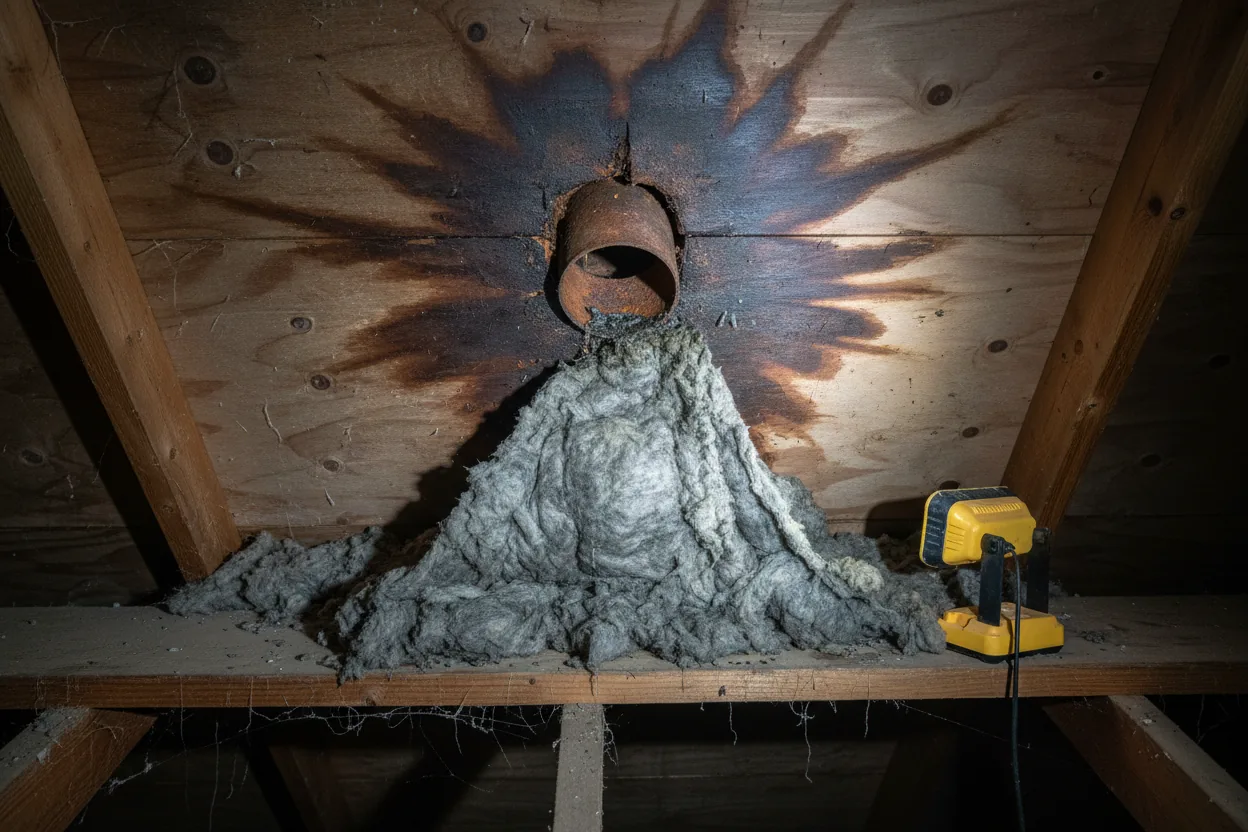
Wind-driven rain finds lifted shingles, failed flashing at penetrations, and nail pops. The entry point is frequently several feet uphill from where the ceiling gets wet.
Plumbing in the ceiling cavity
Second-floor supply lines and shower pans leak into the ceiling below. Distinguishing this from a roof leak is largely a question of whether the wetting correlates with rain or with use.
Assessing whether the ceiling is safe
A sagging, saturated ceiling is a structural hazard. Wet drywall becomes extremely heavy and can release suddenly, which is a genuine injury risk rather than a theoretical one.
Sagging and bulging drywall
A bulge holding water should not be poked from below by a homeowner. It is drained in a controlled way from a position that is not underneath it.
Wet insulation above the ceiling
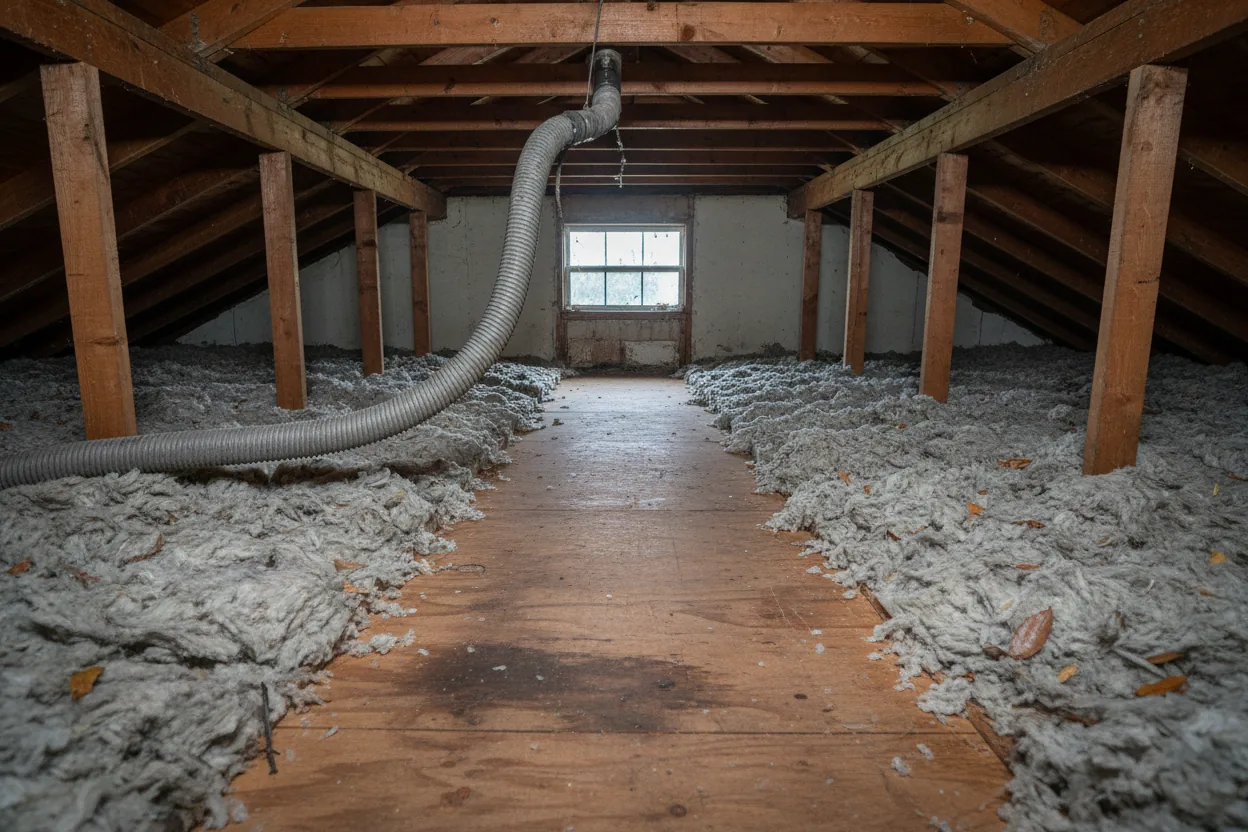
Insulation sitting on the ceiling drywall holds water against it and destroys its own R-value. It is removed rather than dried in almost every case.
Step by step
How a ceiling loss is handled
- Make the area safe. People and contents move out from under a sagging ceiling before anything else happens.
- Find the source in the attic. The diagnosis happens above, tracing the water back from where it dripped to where it entered.
- Relieve trapped water safely. Controlled drainage from a safe position rather than a puncture from below.
- Remove wet insulation. Saturated insulation above the ceiling comes out so the drywall can dry from both sides.
- Dry and verify. Equipment runs on both the room and the attic side until readings hold.
- Repair and finish. Drywall, texture and paint returned, matched to the existing ceiling.
Straight answers on price
What ceiling water damage costs
Ceiling repairs are priced on the area removed plus the finish match. Texture matching on a Florida ceiling is often the fiddliest part of the job.
| What drives the price | Why it moves the number |
|---|---|
| Area of ceiling affected | Priced on the wet footprint found by meter, which extends past the visible stain in nearly every case. |
| Insulation removal | Wet insulation above the ceiling is removed and replaced rather than dried, and attic work in a Florida summer is slow. |
| Texture matching | Knockdown and orange peel textures common in Gainesville homes are hard to match invisibly on a partial repair, and sometimes the whole ceiling plane is refinished. |
| Height and access | Vaulted ceilings and stairwell ceilings need staging, which adds labour before any repair begins. |
| Source repair | The HVAC service or roofing repair is a separate trade cost and is not included in the restoration line. |
A sudden overflow or a storm-created roof opening is normally covered. A slow roof leak that has been staining for months is commonly denied as long-term seepage and lack of maintenance, which is why acting on the first small stain matters financially as well as physically.
Questions people ask
Questions people ask
There is a brown ring on my ceiling but it feels dry. Is it old?
Not necessarily. Condensate overflow is intermittent, so it can run, stop and dry between cycles while continuing every time the air handler runs. A meter reading in the attic settles it quickly, and the assessment for that is free.
Should I poke the bulge to let the water out?
Not from underneath. A saturated bulge can release the whole section at once, and wet drywall is heavy enough to cause real injury. If you must relieve it, do it from the side rather than below, or wait for a crew.
Why does my ceiling only leak when the air conditioning runs?
That is the classic condensate signature and it points at the attic air handler rather than the roof. A blocked drain line backs up into the secondary pan and overflows while the unit runs. Rain-correlated leaks point at the roof instead.
Can you match my ceiling texture?
Usually yes. Knockdown and orange peel are the common Gainesville textures and both can be matched, though a partial repair on an older ceiling can show a subtle difference in sheen. Where the match would be obvious we recommend refinishing the whole plane.
Keep reading
Related
Roof leak water damage
Gainesville Rapid Water Damage dries and repairs the interior damage caused by roof leaks across Gainesville and Alachua County....
Wet insulation removal
Gainesville Rapid Water Damage removes saturated insulation from Gainesville attics, walls and floor systems. Wet insulation is...
Mold remediation
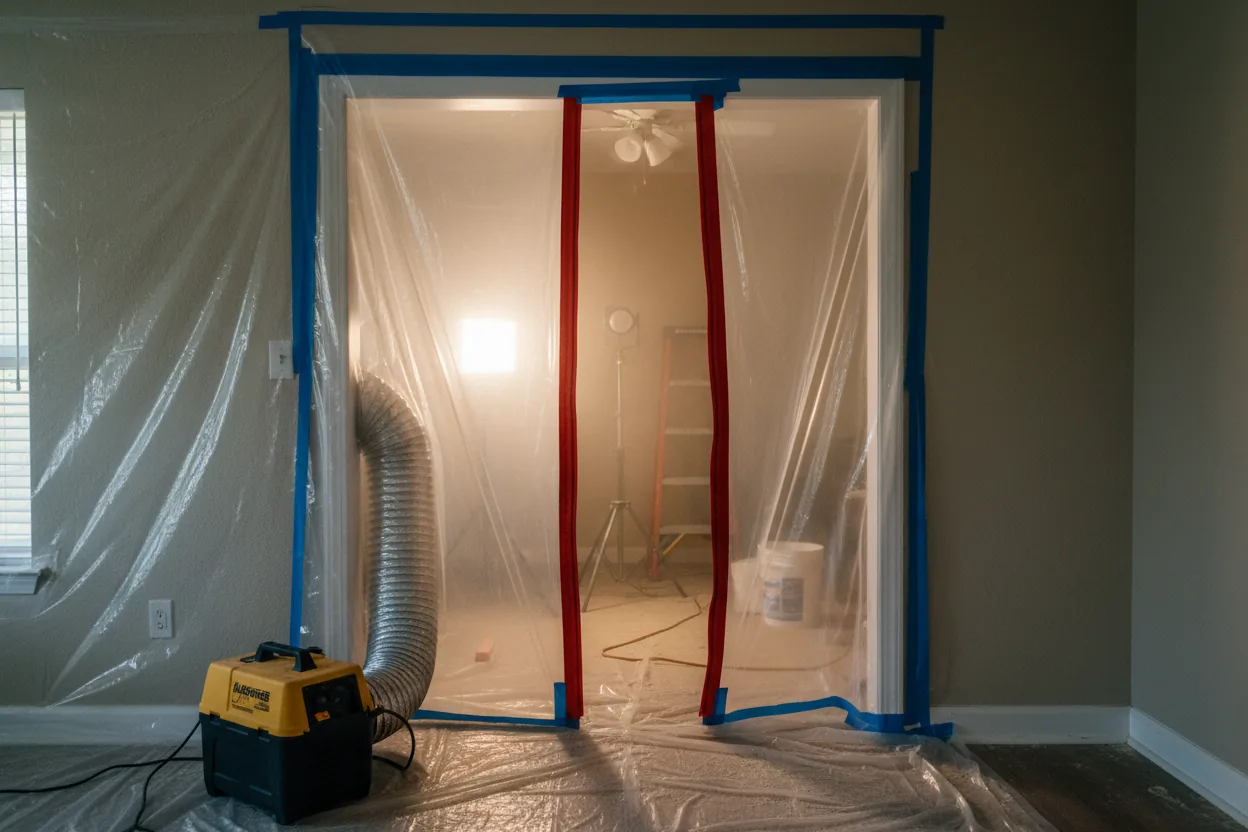
Gainesville Rapid Water Damage remediates mold growth that follows water damage in Gainesville and Alachua County buildings....
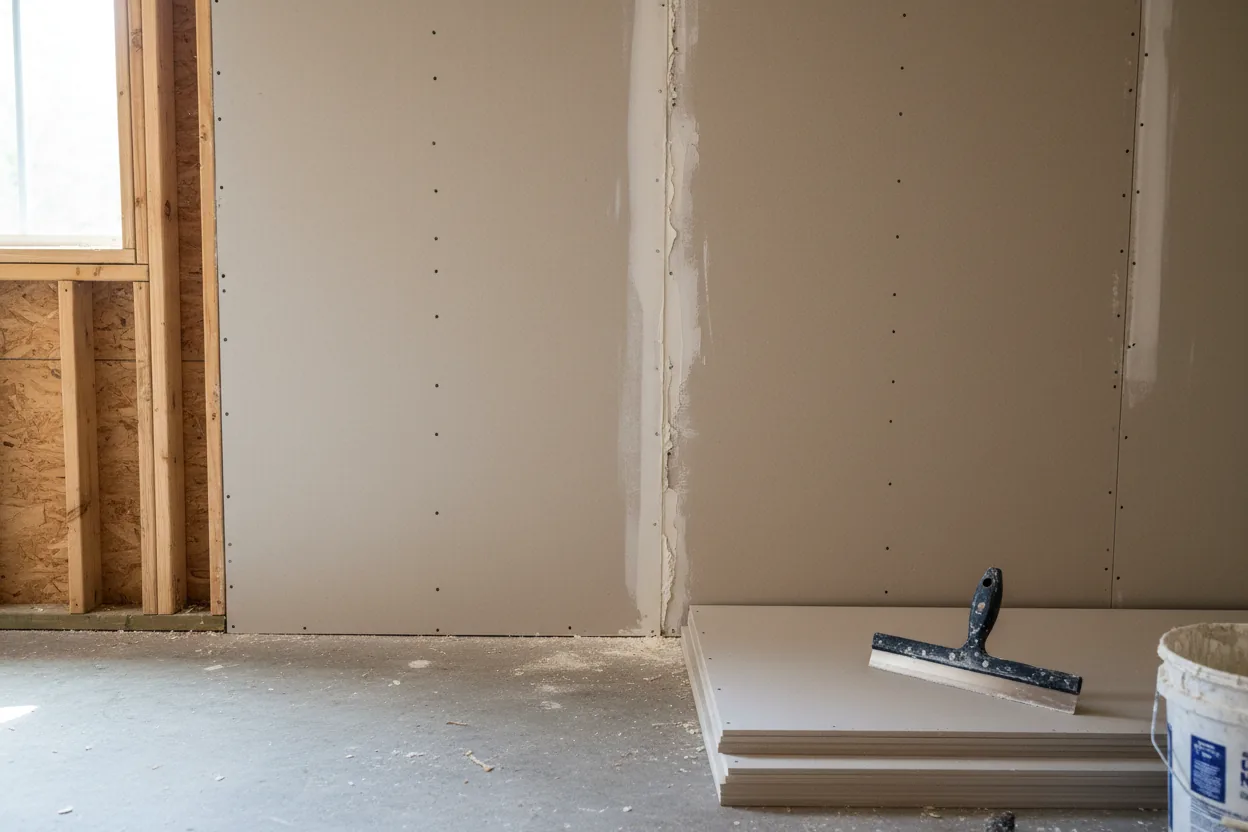
Water damage repair and reconstruction
Gainesville Rapid Water Damage rebuilds what the water and the mitigation removed, from drywall and trim through paint and...
Water still moving? Call now.
Every hour wet material stays wet, the repair gets bigger. Gainesville Rapid Water Damage answers 24/7 and books a free on-site assessment across Gainesville and Alachua County.
Call (352) 450-6122 Same-day response*