Water damage service
Gainesville Rapid Water Damage: water damage repair and reconstruction in Gainesville, FL
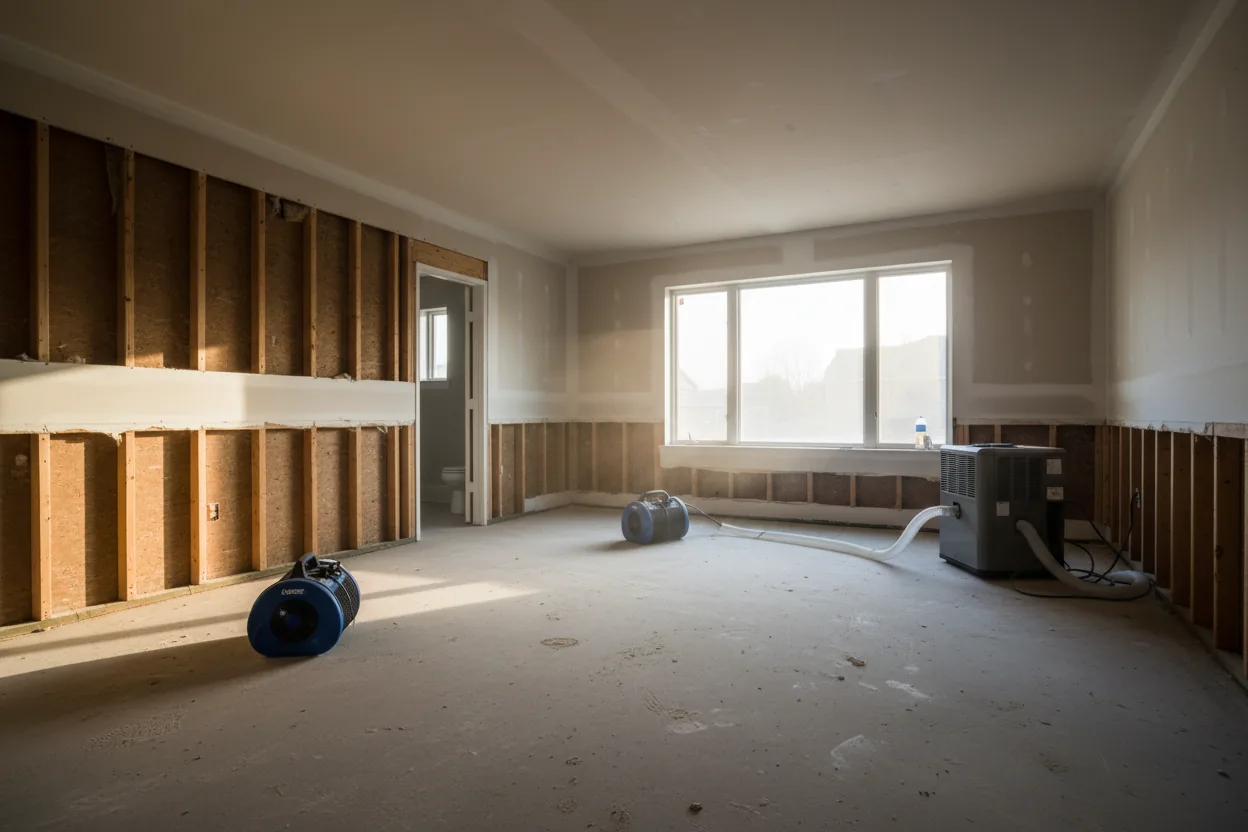
Gainesville Rapid Water Damage rebuilds what the water and the mitigation removed, from drywall and trim through paint and flooring. Reconstruction begins only when moisture readings hold at the dry standard, because closing a wall over damp framing is the single most expensive mistake available in this trade and it does not become visible for weeks.
Call (352) 450-6122 Same-day response* across Gainesville and Alachua County
Keeping drying and rebuild under one roof matters for exactly that reason. When two companies split the job, the person closing the wall has usually never seen a moisture reading for what is behind it.
Rebuilding after mitigation
The rebuild scope is set by what mitigation removed, which is why a careful flood cut earlier makes this stage cheaper and cleaner.
Hanging and finishing drywall
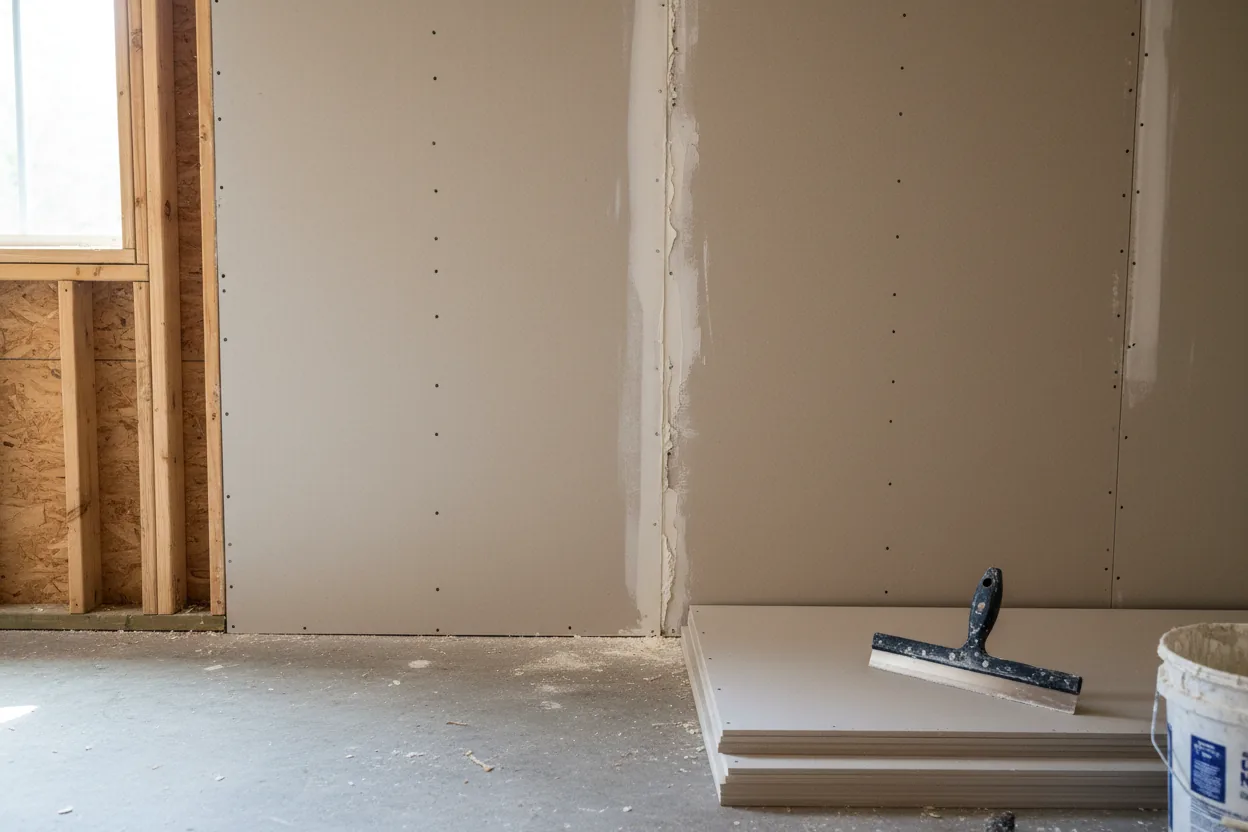
New board hung to the existing cut line, then taped, floated and sanded so the seam does not telegraph through the finish.
Matching wall and ceiling textures
Knockdown and orange peel are the common Gainesville finishes. Matching an existing texture on a partial repair is skilled work and is where most repairs visibly fail.
Replacing trim, baseboard and doors
Baseboard is almost always affected in a floor-level loss. Matching profile matters in older homes where the original trim is not a current stock item.
Installing replacement flooring
Flooring that could not be dried is replaced, which raises the question of matching against undamaged adjoining rooms.
Repairing older and historic Gainesville homes
The historic districts need a different approach, and treating a 1920s house like a 2005 house produces a repair that is technically sound and visibly wrong.
Plaster rather than drywall
Genuinely old homes may have plaster over lath. Patching plaster is a different trade skill from hanging drywall, and a drywall patch in a plaster wall shows.
Matching discontinued materials
Original trim profiles, older tile and discontinued flooring frequently cannot be bought. The choice is between sourcing salvage, milling to match, or replacing a larger area for consistency.
Step by step
How reconstruction runs
- Confirm dry, in writing. Readings must hold at the dry standard before any material closes a cavity.
- Agree the scope and finishes. What gets replaced, what gets matched, and where a visible transition is unavoidable.
- Rebuild the structure. Insulation, drywall, and any framing repairs go back first.
- Finish surfaces. Tape, float, texture and paint, matched to the existing surfaces.
- Reinstall trim and flooring. Baseboard, doors and floor covering, with transitions handled deliberately rather than by default.
- Walk through. You inspect the work against the agreed scope before the job closes.
Straight answers on price
What reconstruction costs
Reconstruction is normally the larger half of a water damage job, and it is driven by finishes rather than by the amount of water involved.
| What drives the price | Why it moves the number |
|---|---|
| Area rebuilt | Directly proportional to what mitigation removed, which is why an accurate flood cut earlier pays for itself here. |
| Finish level | Painted drywall and builder-grade carpet rebuild cheaply. Tile with a pattern, custom trim and hardwood do not. |
| Matching difficulty | Discontinued flooring or an original trim profile can make a small repair cost more than a larger, cleaner replacement. |
| Texture matching | Blending texture into an existing wall or ceiling is skilled labour, and sometimes refinishing the whole plane is both cheaper and better looking. |
| Material lead times | Special-order flooring and cabinetry can hold the schedule for weeks, which affects the timeline more than the price. |
Reconstruction is usually paid on a replacement cost basis, commonly with depreciation held back until the work is completed and invoiced. That recoverable depreciation is money you are entitled to but have to claim, and it is frequently left unclaimed.
Questions people ask
Questions people ask
How soon after drying can the rebuild start?
As soon as readings hold at the dry standard, which is typically three to five days into a residential job. Starting earlier risks sealing moisture into the wall. We would rather lose a day than rebuild the same room twice.
Will the repair be visible?
Done well, no, with one honest caveat: texture and paint sheen on an older wall can show a subtle difference where new work meets old. Where that would be noticeable we recommend finishing the full wall or ceiling plane rather than stopping at the patch.
What if my flooring is discontinued?
Three options, and we will lay out all three: source salvage or remaining stock, replace a larger contiguous area so the change lands at a natural transition, or accept a visible difference. Insurance sometimes pays toward a larger area for a reasonable match.
What is recoverable depreciation?
On a replacement cost policy, insurers commonly pay the depreciated value first and release the remainder once the work is completed and invoiced. That held-back amount is yours to claim, and it goes unclaimed surprisingly often because nobody explains the second step.
Keep reading
Related
Water damage restoration
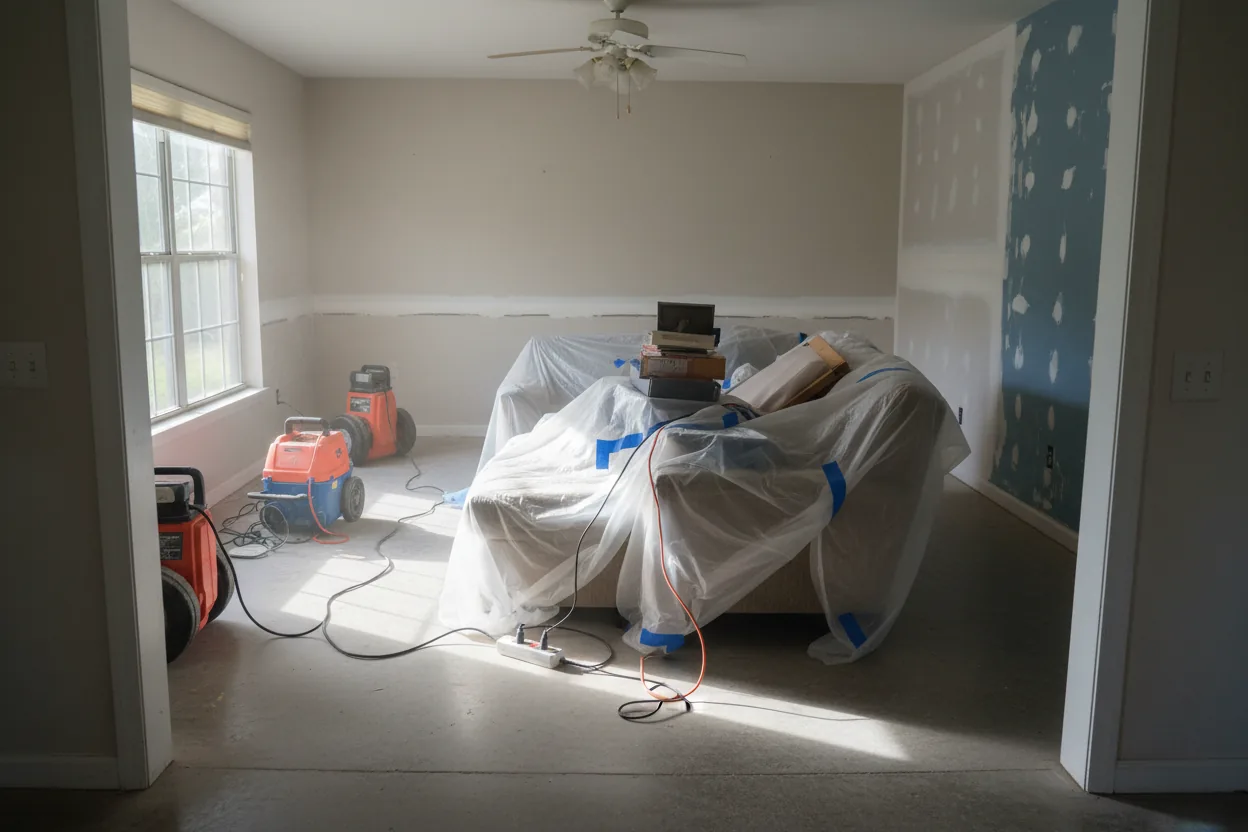
Gainesville Rapid Water Damage runs water damage restoration as one continuous job, from the first extraction through the...
Wet drywall removal
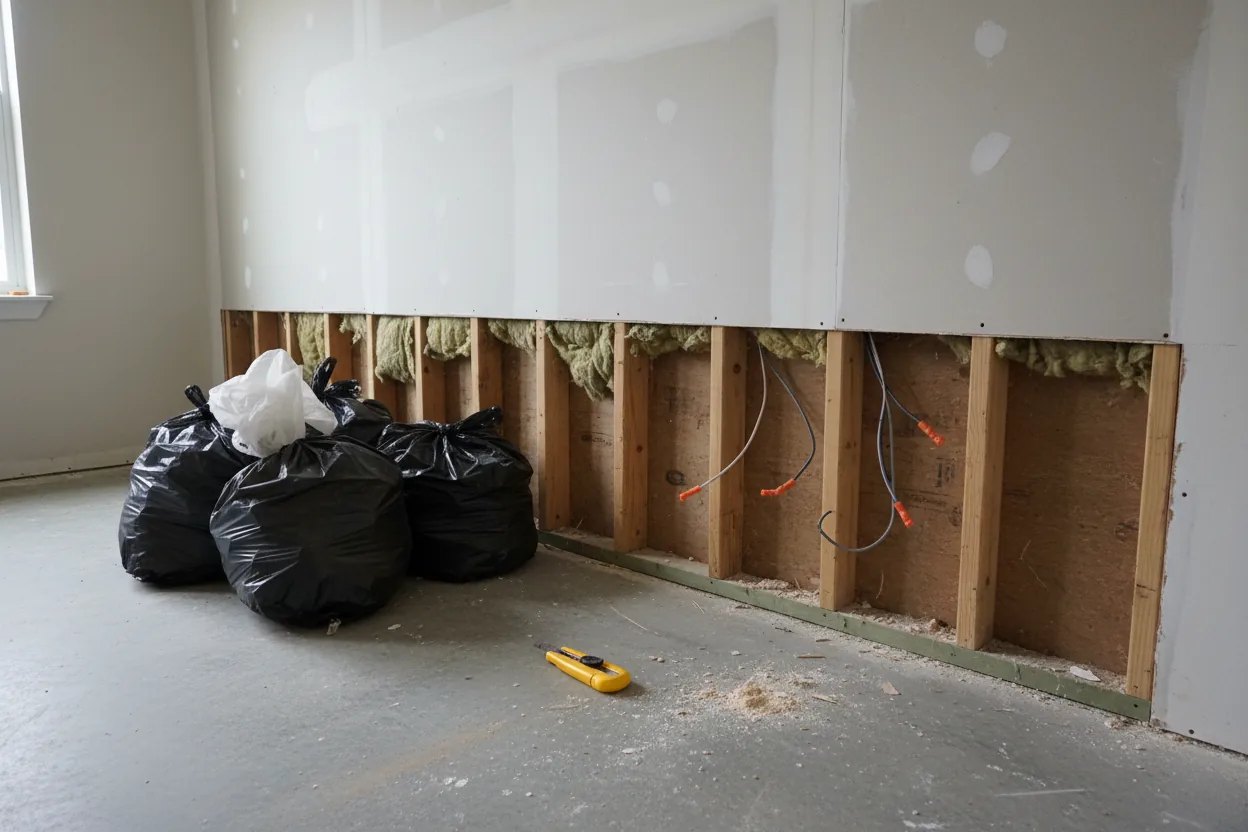
Gainesville Rapid Water Damage removes saturated drywall from Gainesville buildings with controlled cuts back to genuinely dry...
Carpet and flooring drying
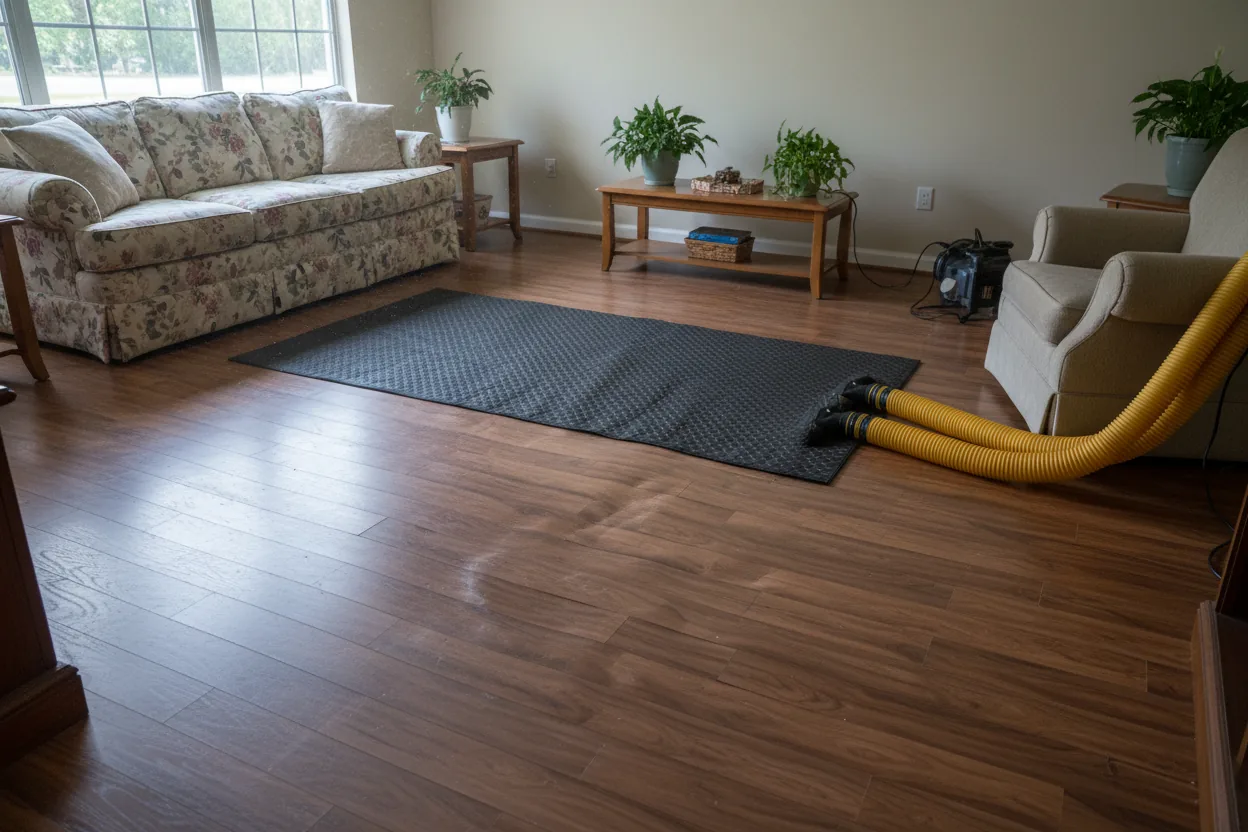
Gainesville Rapid Water Damage decides what flooring can be dried in place and what has to come out, and makes that call with...
Structural drying
Gainesville Rapid Water Damage dries Gainesville buildings to a documented moisture reading using air movers, dehumidifiers and...
Water still moving? Call now.
Every hour wet material stays wet, the repair gets bigger. Gainesville Rapid Water Damage answers 24/7 and books a free on-site assessment across Gainesville and Alachua County.
Call (352) 450-6122 Same-day response*