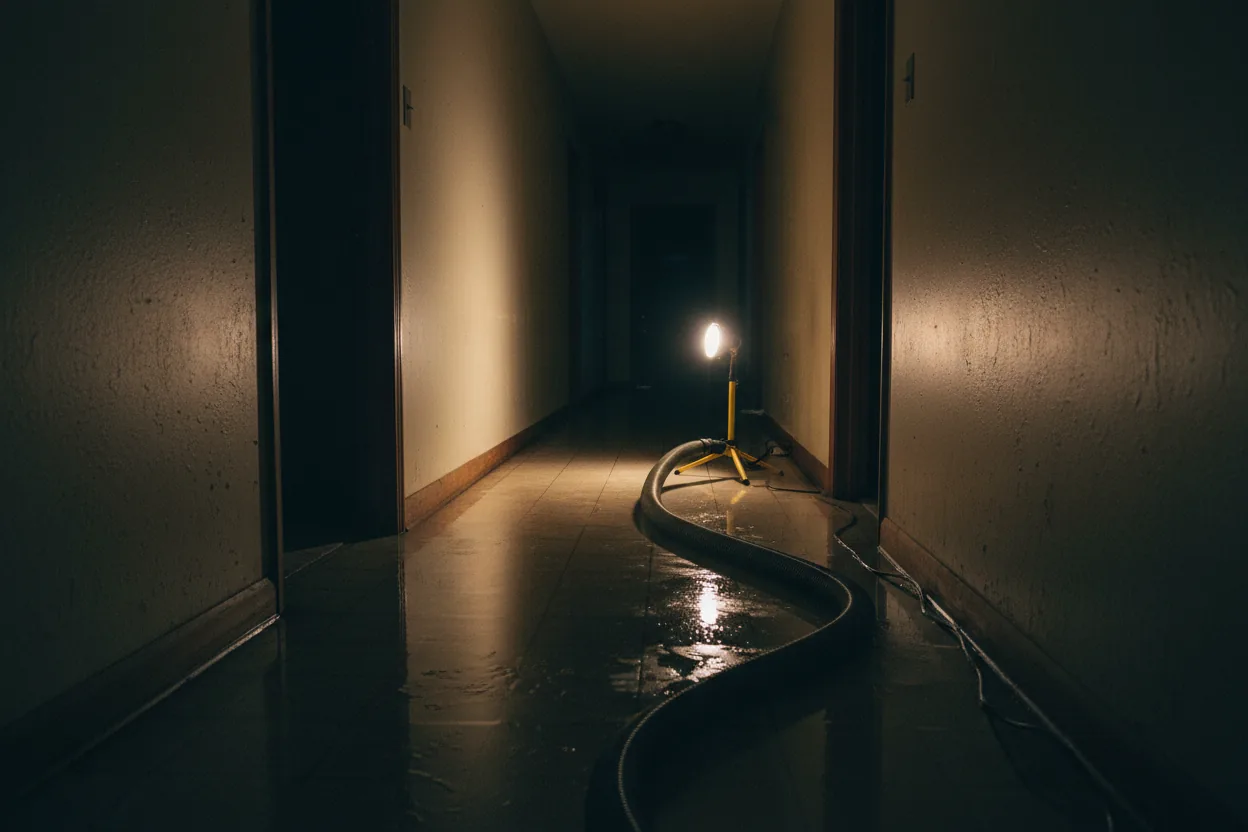
Water damage service
Gainesville Rapid Water Damage: emergency water damage response in Gainesville, FL
The first hour decides how much of your home comes out. We answer 24 hours a day, every day.
Call (352) 450-6122 Same-day response* across Gainesville and Alachua County
Water damage is a clock, not an event
Gainesville Rapid Water Damage answers the emergency line 24 hours a day and dispatches extraction crews across Alachua County the same day you call. An emergency water loss is the narrow window before the damage becomes permanent: the Environmental Protection Agency puts mold growth on wet material at 24 to 48 hours, and drywall wicks moisture upward within the first few hours. What we do in that window decides whether your walls get dried or demolished.
The emergency call is different from every other service on this site because it is the only one where speed changes the scope. Everything after it is technique.
Dispatching emergency water extraction
Crews carry truck-mounted extraction, portable units for upstairs and tight access, moisture meters and thermal cameras. The first job on arrival is finding the real wet footprint, which is almost always larger than the visible one, then pulling water before it migrates further.
After-hours emergency water damage
Nights, weekends and holidays are when supply lines fail unattended, and they are the calls where the time difference matters most. The line is staffed at every hour.
Emergency containment and shut-off
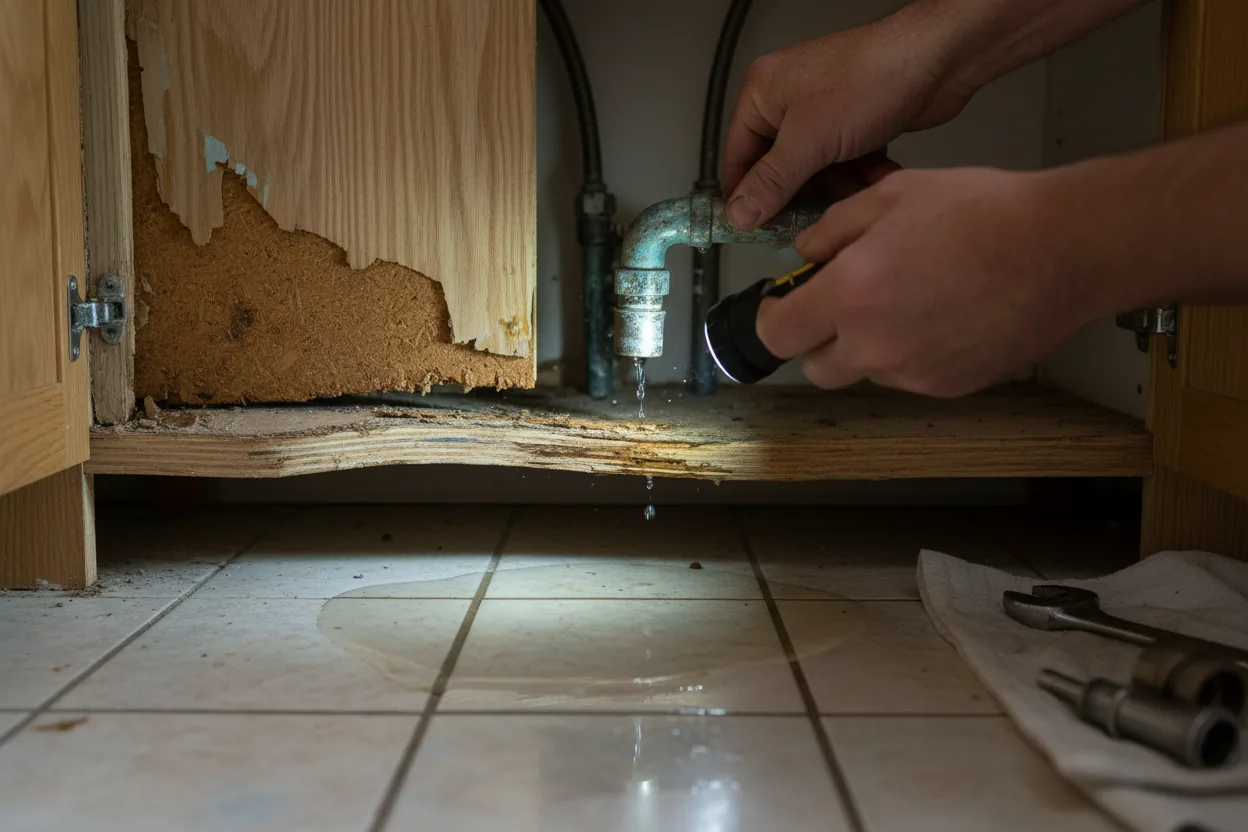
If the source is still running we help you find and close the valve on the phone before the crew arrives, which often saves more material than anything done later.
Emergency response during storm events
During a countywide storm the queue is real. We schedule honestly and tell you what to do in the meantime rather than promising an arrival time we cannot hold.
Assessing the loss before anything is removed
No material comes out until the moisture map is done. Demolition decisions made in the first ten minutes, before the meters come out, are how homeowners lose flooring that could have been dried.
Moisture mapping the full footprint
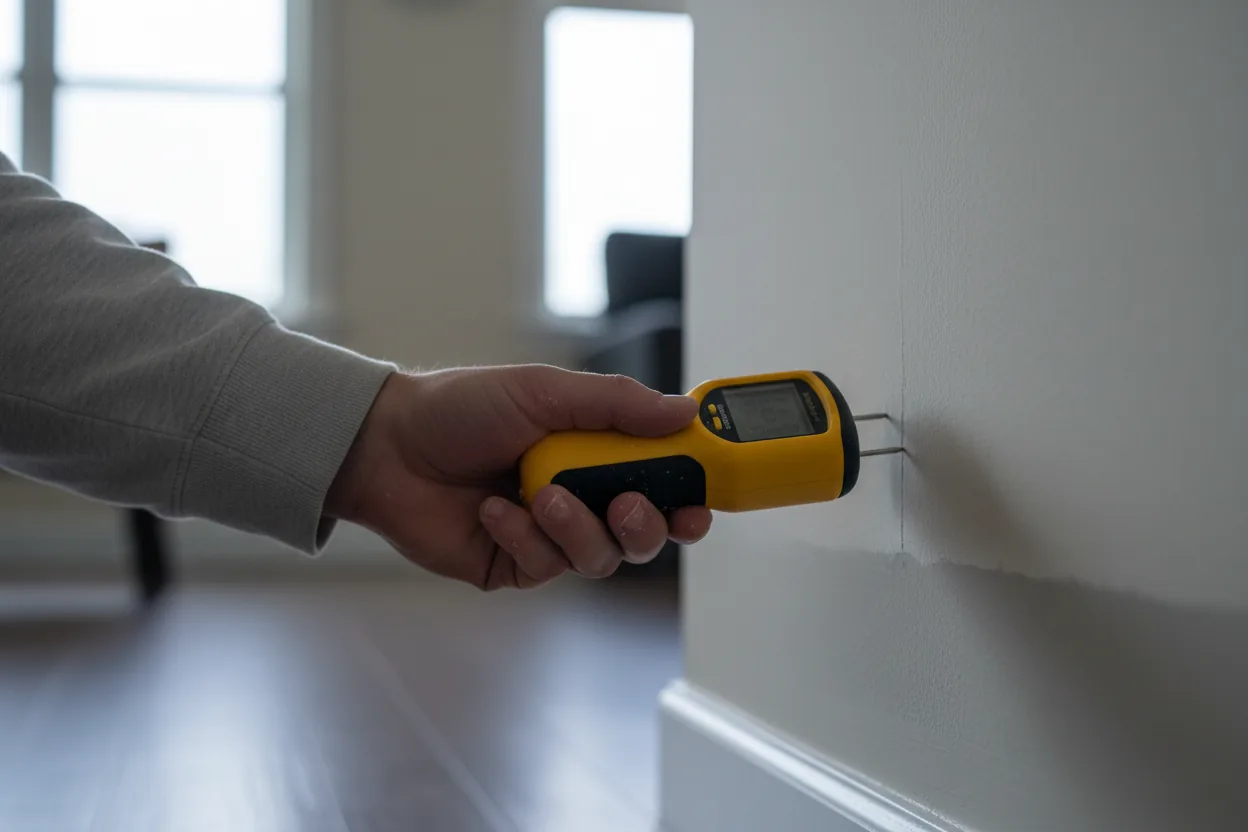
Meters read the moisture content of drywall, subfloor and framing. Thermal imaging shows where water has traveled behind finishes, which is where the damage usually is.
Categorising the water
Clean supply water, grey appliance water and category three black water are three different jobs. The category is decided at the assessment because it determines what can be saved.
Step by step
How an emergency call runs
- You call and our virtual assistant answers. Any hour. We ask what you can see, how long it has been running, and whether the water is shut off.
- We talk you through immediate steps. Shutting the supply valve, cutting power to affected rooms at the breaker, and lifting what you can off wet flooring.
- A crew is dispatched. We give you an honest window based on current call volume rather than a fixed promise.
- The wet footprint is mapped. Meters and thermal imaging find water behind finishes before any material is cut.
- Extraction begins. Standing and absorbed water comes out, which is what limits how much material has to be removed later.
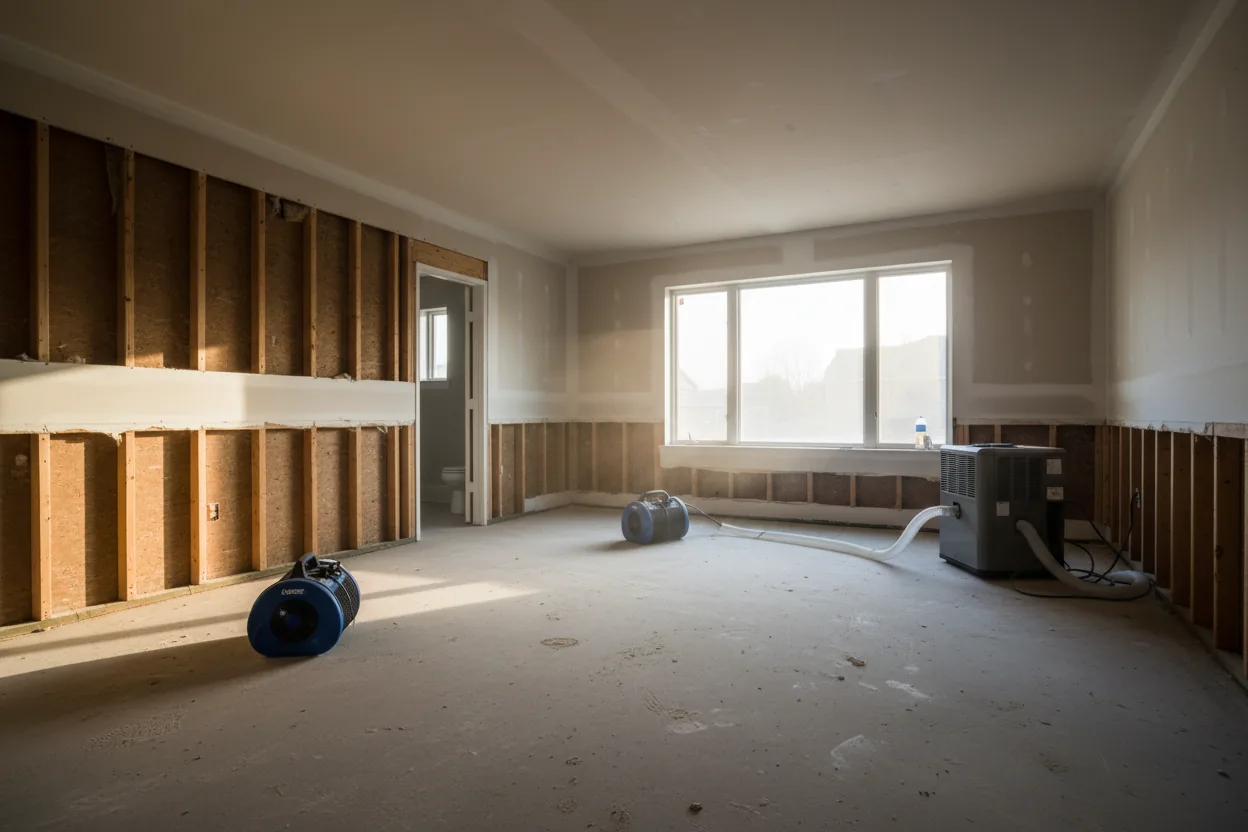
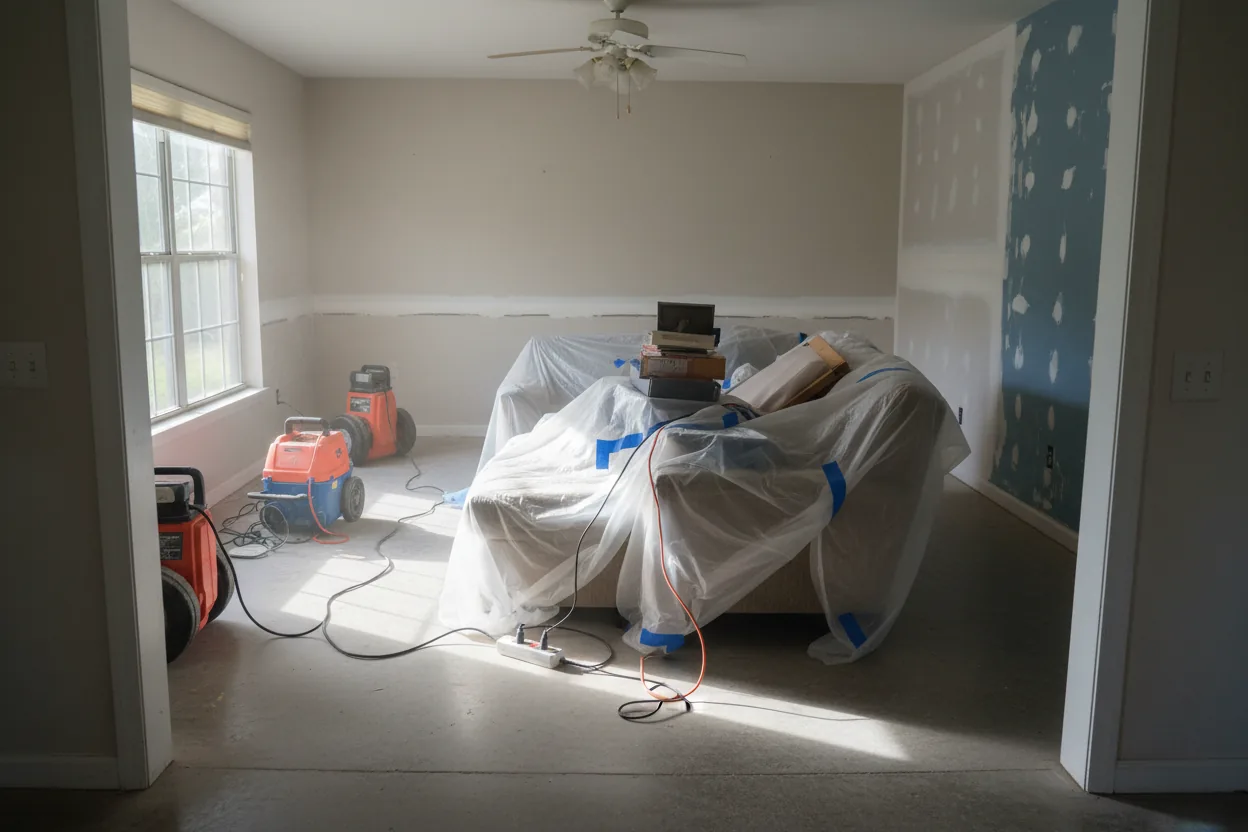
- Drying equipment is set and logged. Air movers and dehumidifiers are placed, and day-one moisture readings are recorded as the baseline.
Straight answers on price
What an emergency call costs
The assessment is free. What follows is priced on what the meters find, and the largest single factor is how long the water sat before the call.
| What drives the price | Why it moves the number |
|---|---|
| Hour of the call | We do not charge a night or weekend premium for answering. Crew availability at 3am is a scheduling question, not a pricing one. |
| Time elapsed before the call | The dominant cost factor. Under 24 hours usually means drying in place. Past 48 hours usually means removal, which multiplies the job. |
| Whether the source is still running | An active leak keeps growing the wet footprint while you wait, so the shut-off is the first thing we address on the phone. |
| Extraction volume | Standing water depth and area determine truck time before drying equipment is even placed. |
| Number of rooms affected | Each additional room adds equipment days, and equipment is billed per unit per day. |
Sudden and accidental water damage is typically covered by homeowners policies, and taking emergency action to prevent further damage is usually required by the policy rather than optional. We document from the first visit so the mitigation you authorise is evidenced properly.
Questions people ask
Questions people ask
Should I call you or my insurance company first?
Call us first. Most policies require you to take reasonable steps to prevent further damage, so stopping the spread is what your insurer expects. We document the loss from the first visit, which gives your claim better evidence than a delayed start would.
It is the middle of the night. Is it worth waiting until morning?
No. Waiting eight hours can move a job from drying in place to removing flooring and drywall, because moisture keeps wicking upward the whole time. The overnight difference is frequently the difference between a repair and a rebuild.
What if I already cleaned up the water myself?
Still worth an assessment, and it is free. Surface water coming up with a mop does not mean the subfloor, wall cavity and insulation are dry. Meters find what a towel cannot, and hidden moisture is what grows mold two weeks later.
Can you stop the leak itself?
We stop the damage and dry the structure. For the plumbing repair itself we coordinate with a licensed plumber, since that is a separately licensed trade in Florida. Mitigation starts immediately either way.
Keep reading
Related
Water extraction
Gainesville Rapid Water Damage removes standing and absorbed water from Gainesville homes and businesses with truck-mounted and...
Structural drying
Gainesville Rapid Water Damage dries Gainesville buildings to a documented moisture reading using air movers, dehumidifiers and...
Burst pipe water damage
Gainesville Rapid Water Damage responds to burst supply line failures across Gainesville and Alachua County, usually within the...
Water damage restoration
Gainesville Rapid Water Damage runs water damage restoration as one continuous job, from the first extraction through the...
Water still moving? Call now.
Every hour wet material stays wet, the repair gets bigger. Gainesville Rapid Water Damage answers 24/7 and books a free on-site assessment across Gainesville and Alachua County.
Call (352) 450-6122 Same-day response*