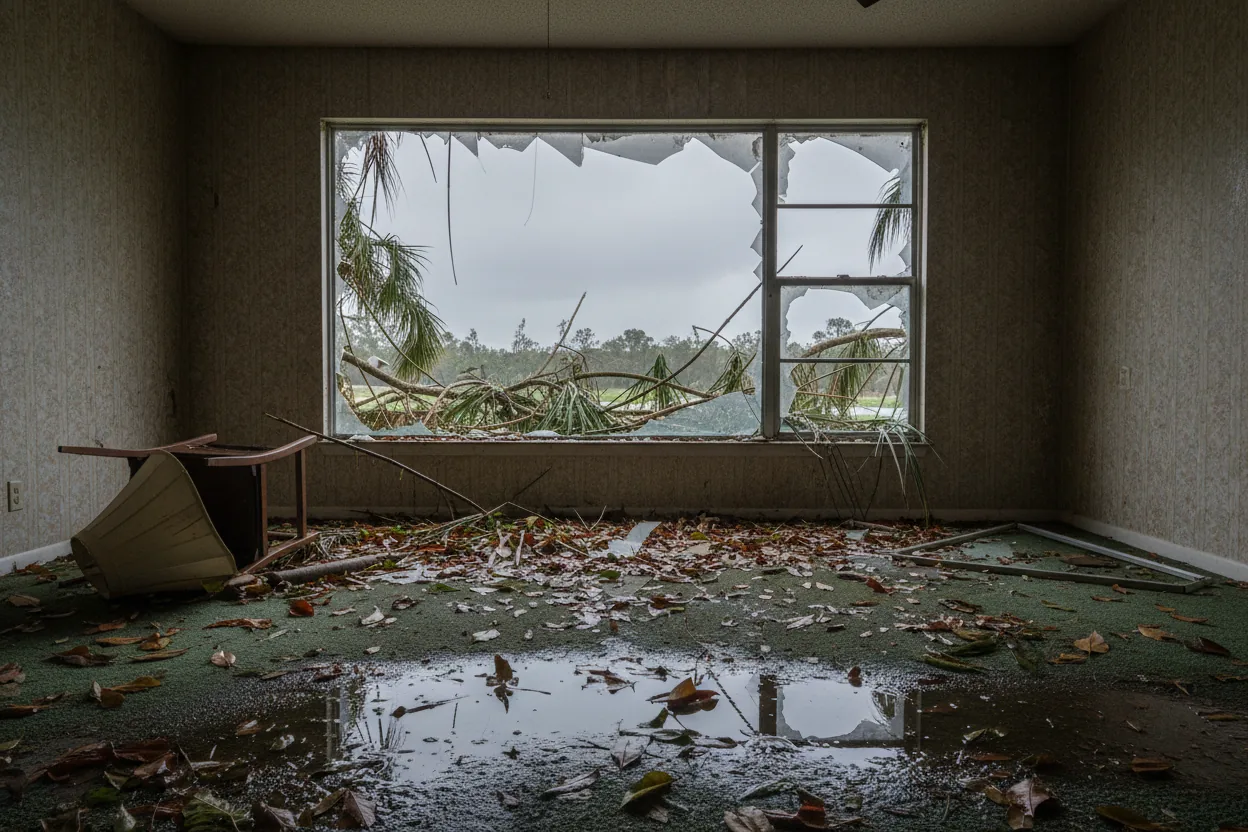
Water damage service
Gainesville Rapid Water Damage: storm damage cleanup in Gainesville, FL
Gainesville Rapid Water Damage responds to storm-related water intrusion across Alachua County, from wind-driven rain through a compromised envelope to tree impact that opens a roof outright. Storm work differs from every other service here in one respect: everyone calls at once. Honest scheduling during a countywide event is worth more than an arrival promise nobody can keep.
Call (352) 450-6122 Same-day response* across Gainesville and Alachua County
North central Florida gets two distinct storm threats. Convective thunderstorms from June through September arrive most afternoons and bring brief, intense, wind-driven rain. Tropical systems arrive less often and produce sustained rainfall and freshwater flooding well inland, as north central Florida saw after Hurricane Irma in 2017.
Securing the building after a storm
The first job is closing the envelope. Until the building is weathertight, drying is wasted effort because the next band of rain undoes it.
Emergency board up and tarping
Broken windows, damaged doors and roof openings are closed immediately, which is often the difference between one loss and two.
Removing water and debris
Storm water arrives with leaves, roof grit and outdoor contamination, so extraction is followed by physical debris removal.
Making the area safe
Standing water near electrical, compromised ceilings and unstable material are addressed before restoration starts.
Restoring after tree and wind impact
Alachua County's mature live oaks and water oaks are one of the county's real assets and, in a storm, one of its real hazards.
Tree impact through the roof
A limb through the roof deck creates a large opening and heavy interior wetting at once. Removal is coordinated with tarping so the building is not left open.
Water intrusion around windows and doors
Wind-driven rain enters through failed seals and weep systems without any visible exterior damage, which makes it easy to misdiagnose as a plumbing leak.
Post-storm humidity
After a tropical system, outdoor humidity stays near saturation for days, so drying depends entirely on dehumidification rather than ventilation.
Step by step
How storm response runs
- Triage the call. During a countywide event we prioritise by severity and safety and tell you honestly where you sit.
- Close the envelope. Board up and tarping so the next rain does not restart the loss.
- Extract water and debris. Bulk water first, then the material the storm brought inside with it.
- Dry with dehumidification. After a tropical system, outside air is useless for drying, so sealed dehumidification does the work.
- Document thoroughly. Storm claims are scrutinised, so photographs and readings are captured from the first visit.
Straight answers on price
What storm damage cleanup costs
Storm work is priced like other water losses, with two additions: envelope securing, and the reality that a large event stretches equipment availability across the county.
| What drives the price | Why it moves the number |
|---|---|
| Size of the opening | A lifted shingle and a limb through the deck are different jobs. Opening size drives both the tarping cost and how much water entered. |
| Debris and contamination | Storm water is not clean water. Debris removal and treatment add labour a supply-line loss does not need. |
| Post-storm humidity | Sustained high outdoor humidity after a tropical system extends drying days and increases dehumidification capacity needed. |
| Equipment availability | During a countywide event demand exceeds local supply. We schedule honestly rather than taking a job we cannot equip. |
Wind and storm-created openings are normally covered, and hurricane deductibles in Florida are typically a percentage of the dwelling coverage rather than a flat amount, which makes them substantially larger than a standard deductible. Check which deductible applies before assuming the claim is worth filing.
Questions people ask
Questions people ask
How quickly can you come out after a big storm?
During a countywide event, honestly slower than on a normal day, because everyone calls in the same few hours. We triage by severity and safety, tell you where you sit, and give you steps to limit damage while you wait rather than a promise we cannot keep.
Does Gainesville really get hurricane damage this far inland?
Yes, though it presents differently. Inland north central Florida sees sustained rainfall, freshwater flooding and wind damage rather than storm surge. Hurricane Irma in 2017 produced significant inland flooding across this part of the state.
Should I tarp the roof myself?
Only if you can do it safely from the ground, which usually you cannot. Wet roof surfaces after a storm are extremely slippery and the injury rate for homeowner roof work after storms is high. Emergency tarping is a same-day service and worth the wait.
What is a hurricane deductible?
In Florida, policies typically apply a separate hurricane deductible calculated as a percentage of the dwelling coverage, commonly between 2 and 5 percent, rather than a flat dollar amount. On a $400,000 dwelling a 2 percent deductible is $8,000, which changes the calculation on whether to file.
Keep reading
Related
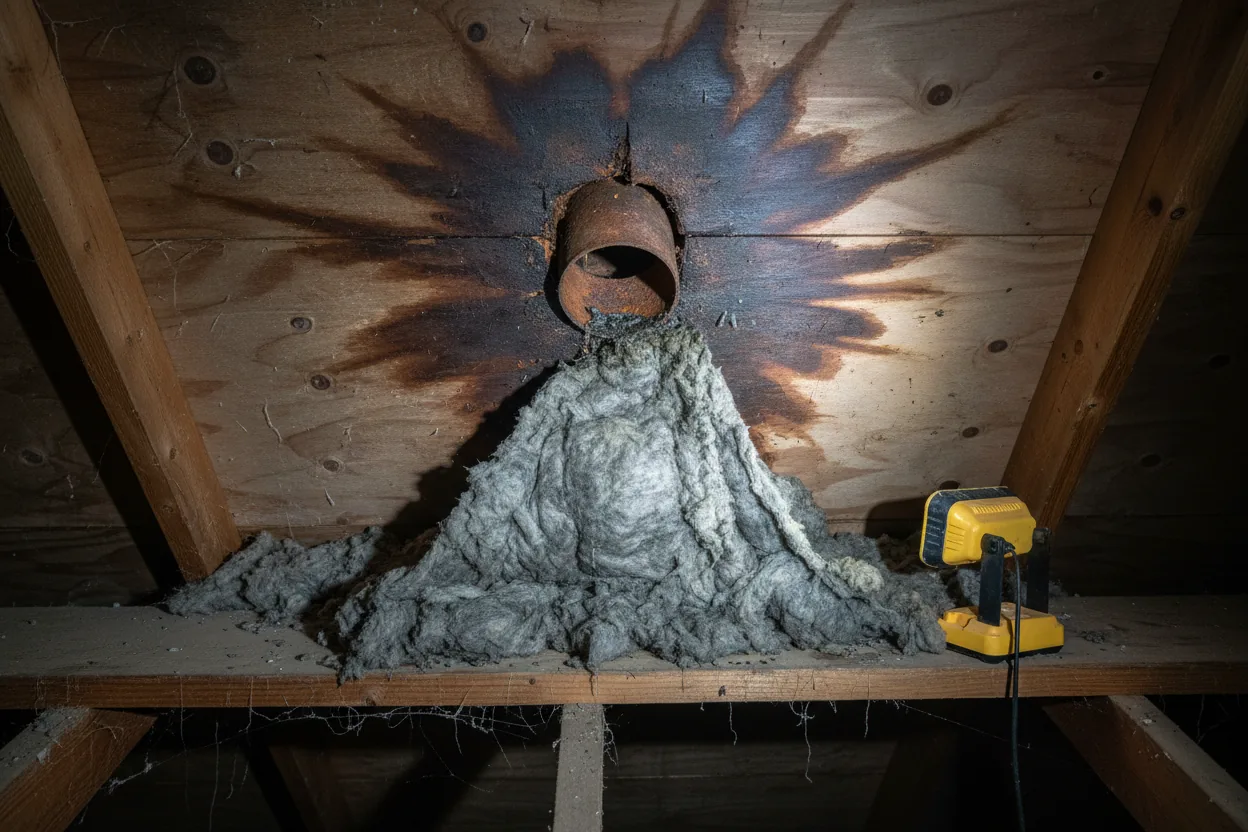
Roof leak water damage
Gainesville Rapid Water Damage dries and repairs the interior damage caused by roof leaks across Gainesville and Alachua County....
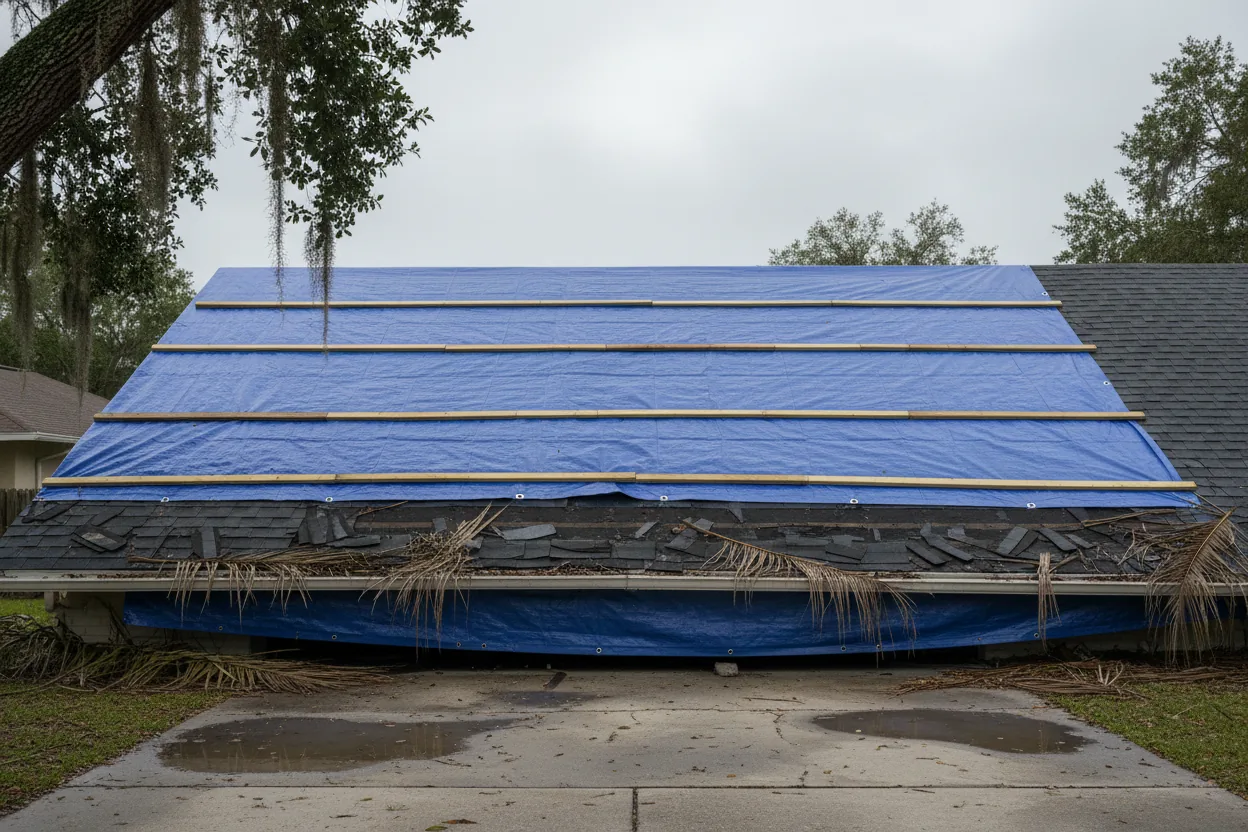
Emergency board up and roof tarping
Gainesville Rapid Water Damage closes damaged building envelopes across Alachua County so weather, animals and trespass cannot...
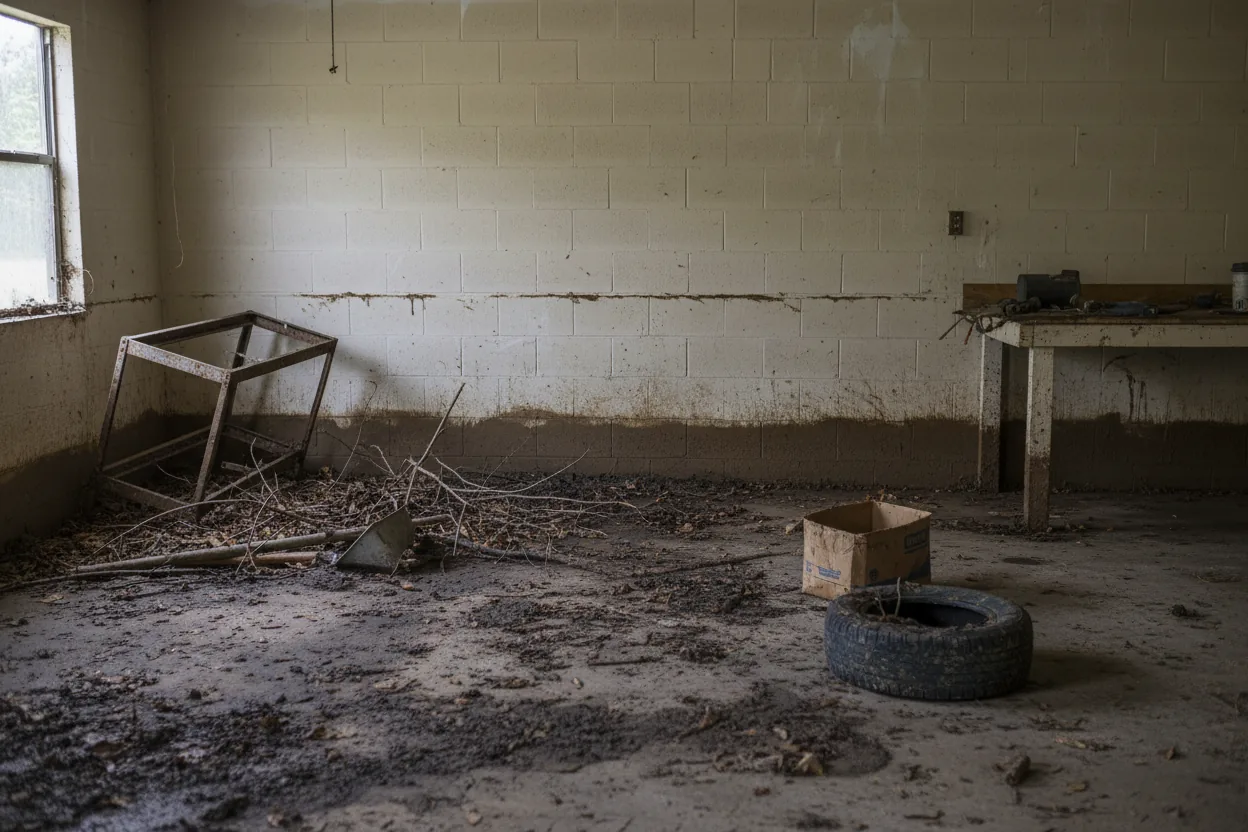
Flood cleanup
Gainesville Rapid Water Damage cleans up flood water that has entered buildings across Gainesville and Alachua County. Flood...
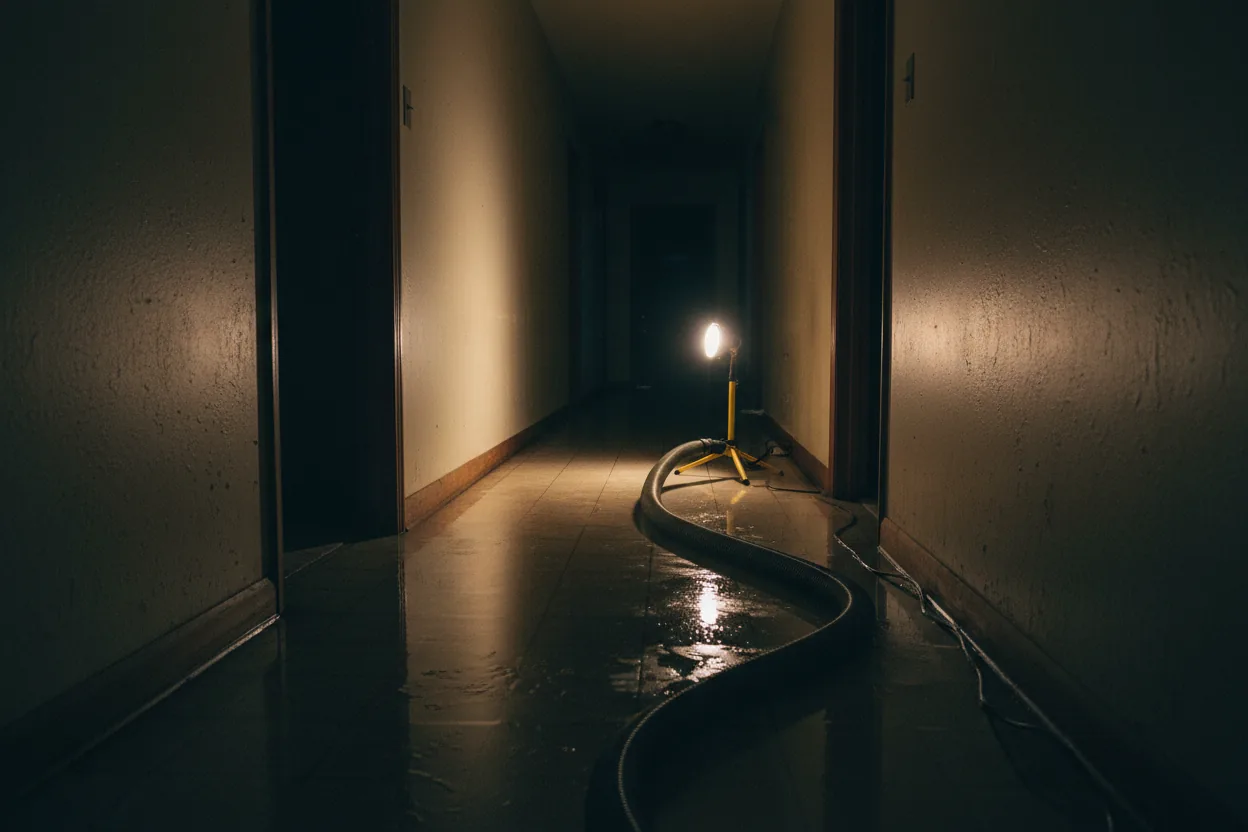
Emergency 24/7 water damage
The first hour decides how much of your home comes out. We answer 24 hours a day, every day.
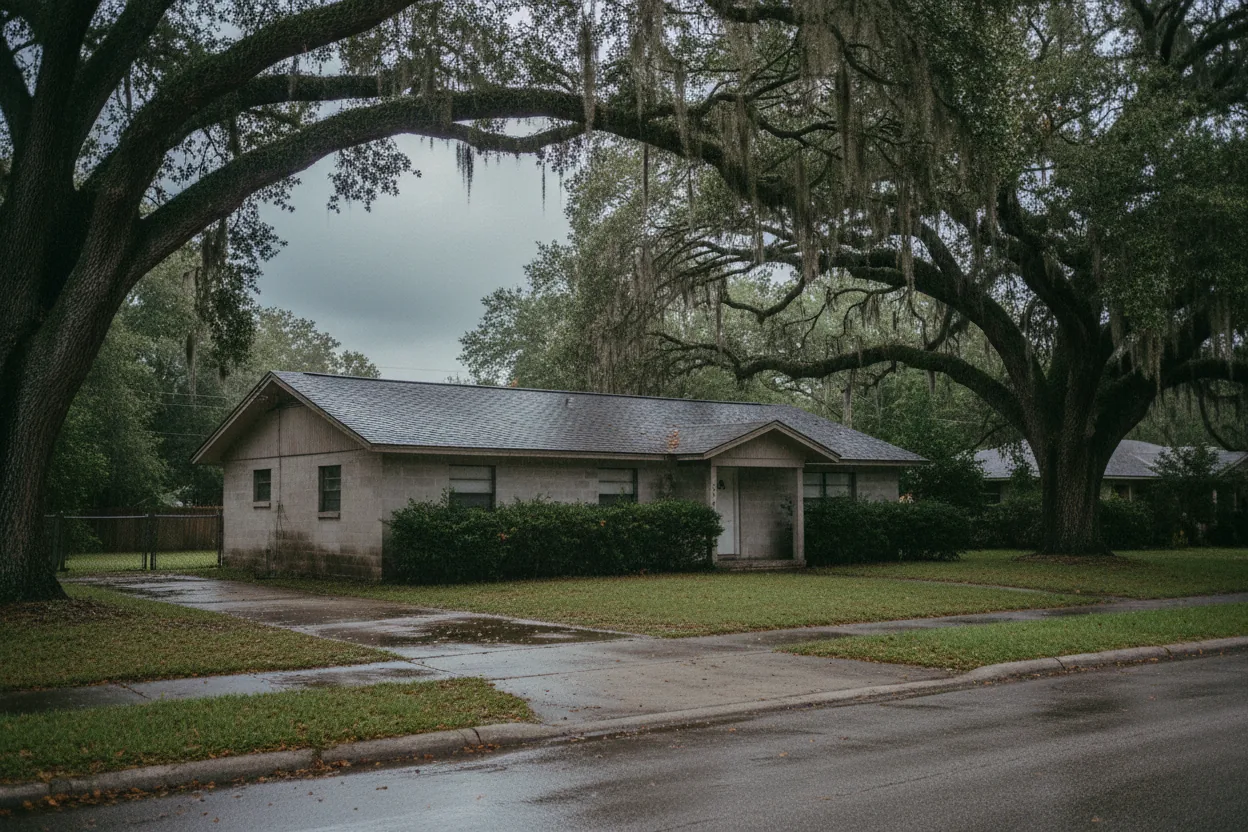
Water still moving? Call now.
Every hour wet material stays wet, the repair gets bigger. Gainesville Rapid Water Damage answers 24/7 and books a free on-site assessment across Gainesville and Alachua County.
Call (352) 450-6122 Same-day response*